Think of it as a giant version of the power bank that charges your phone — but with regular wall outlets built in, so it runs real appliances. You charge it from a wall outlet ahead of time, and most models can also recharge from solar panels or your car.
Watt-hours tell you how much it holds. A 1,000 watt-hour box can run a 100-watt device for roughly 8 or 9 hours. Bigger number, longer it lasts — and heavier it is to carry.
Watts tell you what it can handle at once. A 1,500-watt station runs a fridge, a fan, and phone chargers together. It will not run the whole house or central air — beware anyone who says otherwise.
No gas, no fumes, no carbon monoxide. A gas generator must stay 20 or more feet outside the house. A power station sits in your living room and hums quietly. That difference alone is why so many people are switching.
It runs out, then you recharge it. A gas generator keeps going as long as you pour in fuel; a power station lasts hours, then needs a wall outlet, solar panels, or a car charger to fill back up.
The four worth knowing
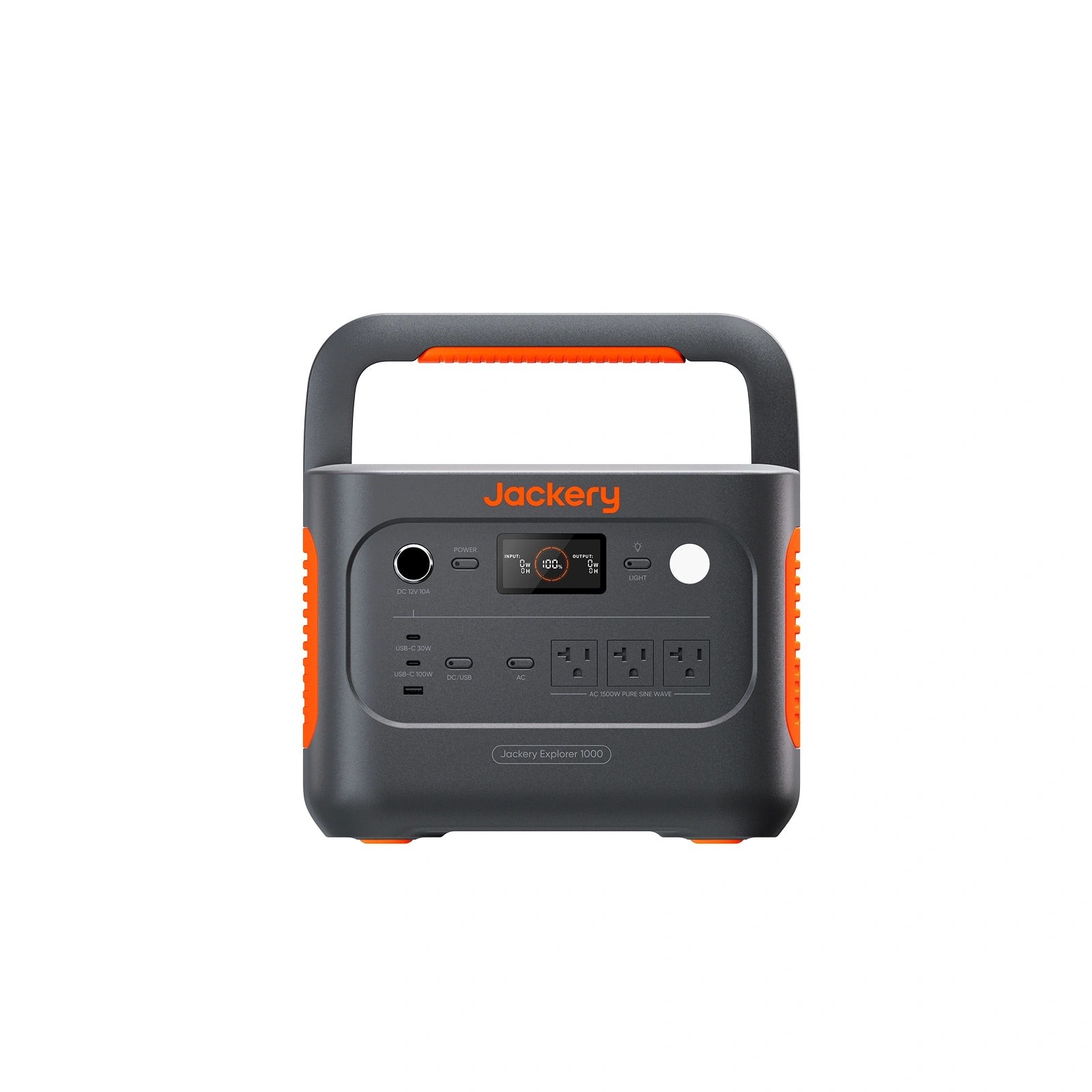
Jackery Explorer 1000 v2 — simplest and lightest
The name most people know. About 1,070 watt-hours and 1,500 watts of output, and at about 24 pounds it is the lightest of the four — easy to carry from room to room. The battery is rated for thousands of charges, about a decade of use. Best if: you want the easy, familiar pick.
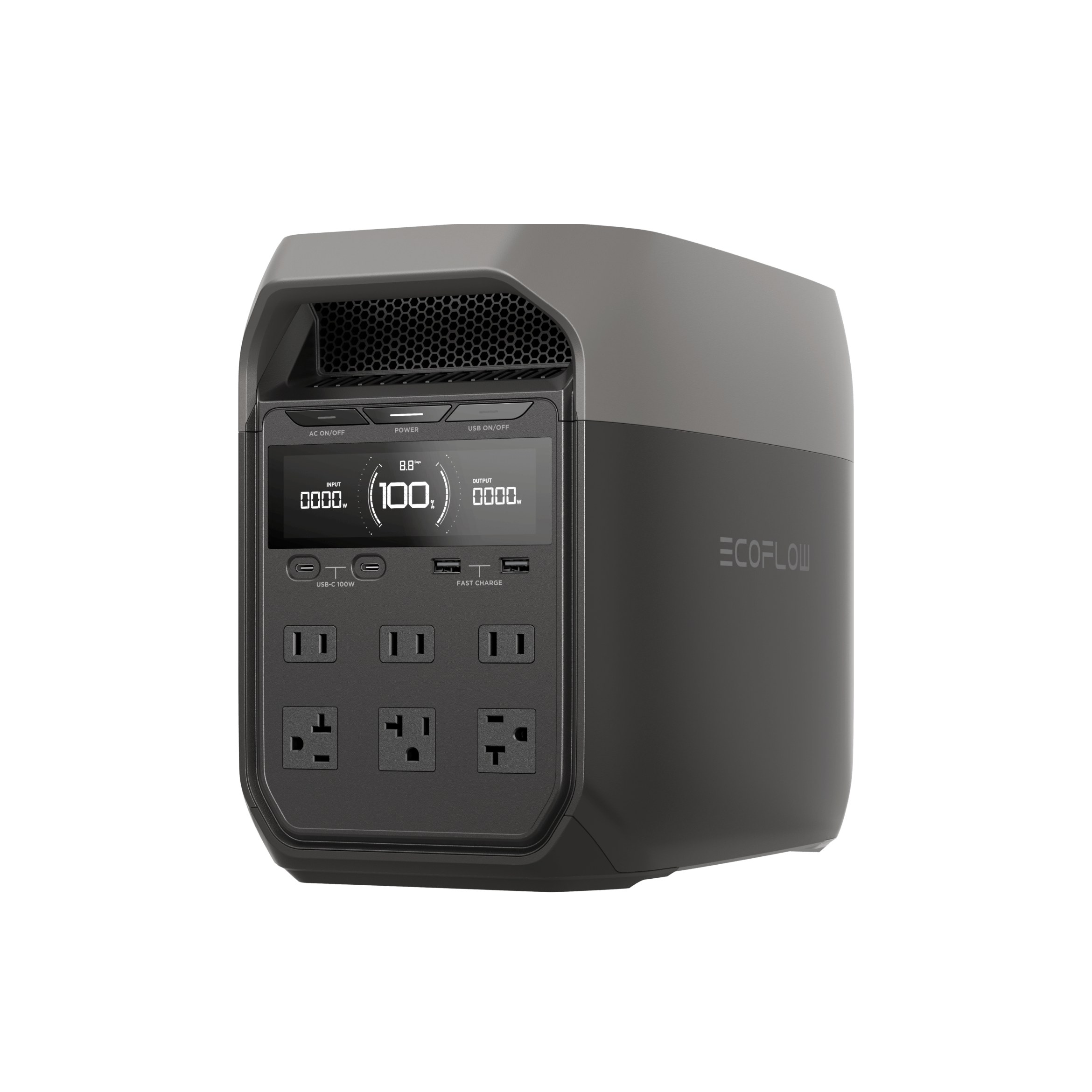
EcoFlow DELTA 3 — fastest charging
About 1,024 watt-hours and 1,800 watts of output. Its standout trick is speed: it recharges from a wall outlet in under an hour, and you can add extra batteries later if your needs grow. Best if: the power flickers often and you want it ready again fast.
Anker SOLIX C1000 — the fast-refilling fourth name
About 1,056 watt-hours and about 2,000 watts of output — the strongest output of the four. Anker is the same company this library recommends for phone chargers and power banks. It recharges from a wall outlet in about an hour, and like the EcoFlow it can add an expansion battery later if your needs grow. Best if: you already trust Anker gear and want the most output in this size.
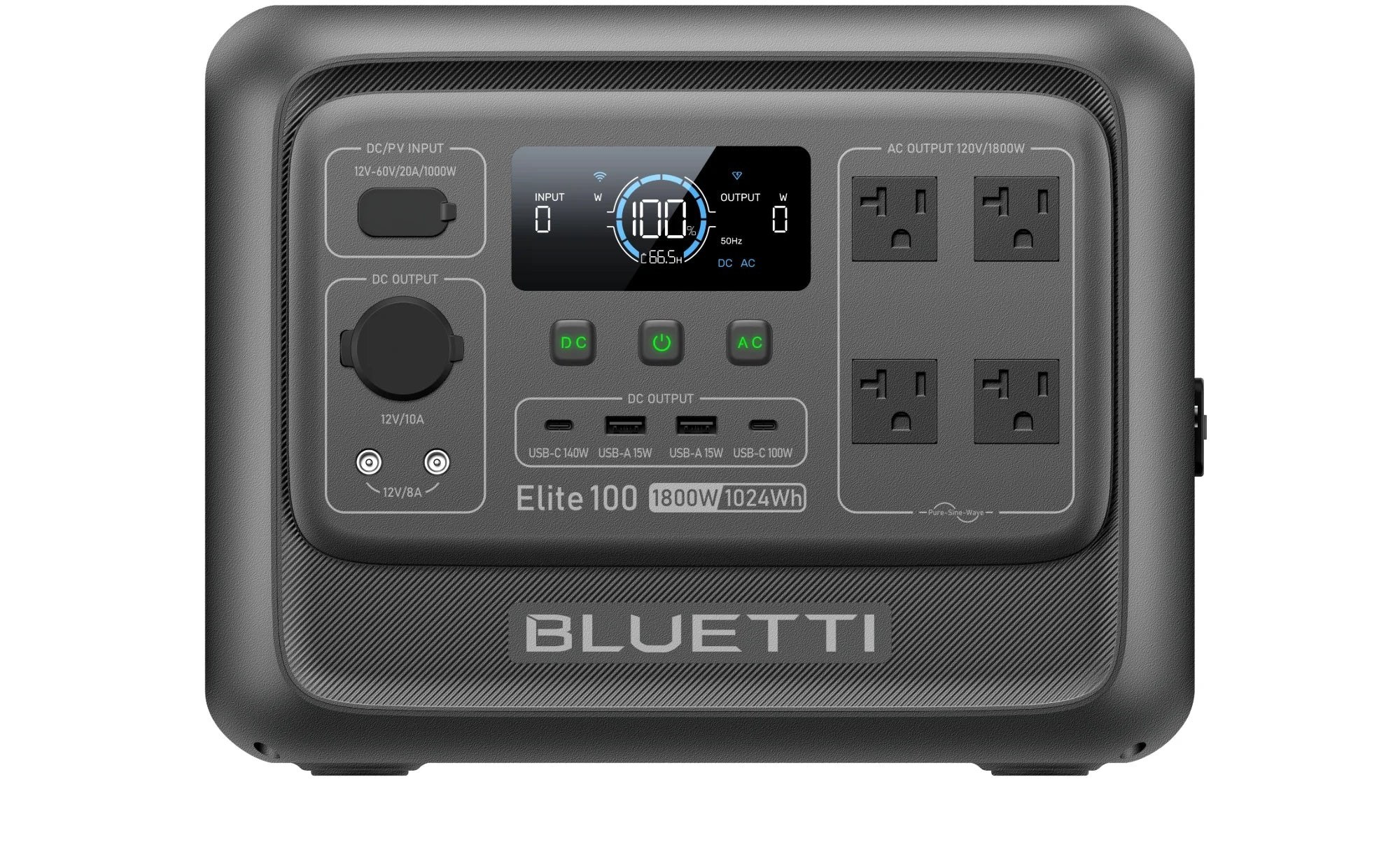
BLUETTI Elite 100 V2 — best for solar
About 1,024 watt-hours and 1,800 watts of output. It accepts up to 1,000 watts of solar panels — the strongest solar charging of the four — so it refills fastest when the sun is doing the work. Best if: you want solar panels for multi-day outages.
What one can actually run
A 1,000 watt-hour station — the size of all four above — handles the essentials that matter in an outage:
A full-size fridge: about 8 to 12 hours — long enough to ride out most outages without losing food.
A CPAP machine: roughly 11 to 19 hours — several nights of sleep, by the maker's own tested numbers.
Phones: around 40 full charges — the whole family stays connected.
Wi-Fi router, a lamp, and a fan together: through the evening on one charge.
Mind the starting gulp: motors — a fridge compressor, a well pump, a sump pump — gulp far more power for a second when they start than they use while running, often two or three times as much. That gulp, not the running number, is what can trip a station off. Stations list a surge (peak) rating alongside their normal watts — check it covers your fridge's starting gulp. If a station keeps shutting off the moment the fridge kicks on, that is a surge mismatch, not a broken station.
What it cannot do:central air conditioning, an electric stove, or the whole house at once. For that you would need a much bigger and heavier system, or a gas generator outside.
How to choose
Keep it simple: the Jackery — lightest to carry, easiest to understand.
Outages are frequent: the EcoFlow — recharges in under an hour, ready for the next one.
Most output, trusted name: the Anker SOLIX — about 2,000 watts, fast wall recharging, and an expansion battery can be added later.
Planning for days without power: the BLUETTI with solar panels — the sun refills it.
Mind the weight: these four run 22 to 28 pounds. The 2,000 watt-hour models weigh 40 to 60+ pounds — think twice before going bigger.
Card note: prices change often and these sell for several hundred dollars — check the current price before buying, and buy before storm season, not during it.
Fridge first. Plug the fridge in right away — every hour of cooling saves your food.
Between storms: store it about half to three-quarters full, and top it up every few months so it is ready when you need it.
Solar panels (sold separately) keep it going if the outage lasts days — set them in direct sun.
Card note: safe indoors does not mean careless — keep the vents clear, keep it dry, and follow the manual. And never bring a gas generator inside, not even the garage.
When to call Sean instead
Choosing the right size before hurricane season.
Figuring out what your fridge, CPAP, or other devices actually need.
Setting up solar panels with a power station.
A station that will not charge, or shuts off unexpectedly.