Solar Panels: The Top Brands
A solar panel turns sunlight into electricity that your backup power station can store. Set the panel in the sun, plug it into the power station, and the battery refills itself — free, silent, and with no gas to buy. Here is how it all works, in plain words, plus the brands worth your money.
What a solar panel actually does
- Sunlight in, electricity out. The dark blue surface is covered in tiny cells that react to sunlight and produce electric current. No moving parts, no noise, nothing to pour in.
- The panel does not store power. It only makes electricity while the sun shines. The backup power station is the part that stores it — think of the panel as the faucet and the power station as the bucket.
- Panels are sold by watts (W). A 200W panel can make up to 200 watts in perfect lab sunlight. In your yard on a bright Florida day, expect more like 70 to 80 percent of that number. That is normal, not a defect.
Portable panels vs rooftop panels
- Portable (folding) panels — what this guide covers. They fold up like a briefcase, set up in the yard or driveway in a minute, and plug straight into a backup power station. No electrician, no permits, no holes in your roof. You take them inside when the storm passes.
- Rooftop panels are a permanent home installation — bolted to the roof, wired into your house, installed by licensed contractors with permits. They cost thousands and are a different project entirely. If a hurricane is coming next week, portable is the answer.
1. EcoFlow
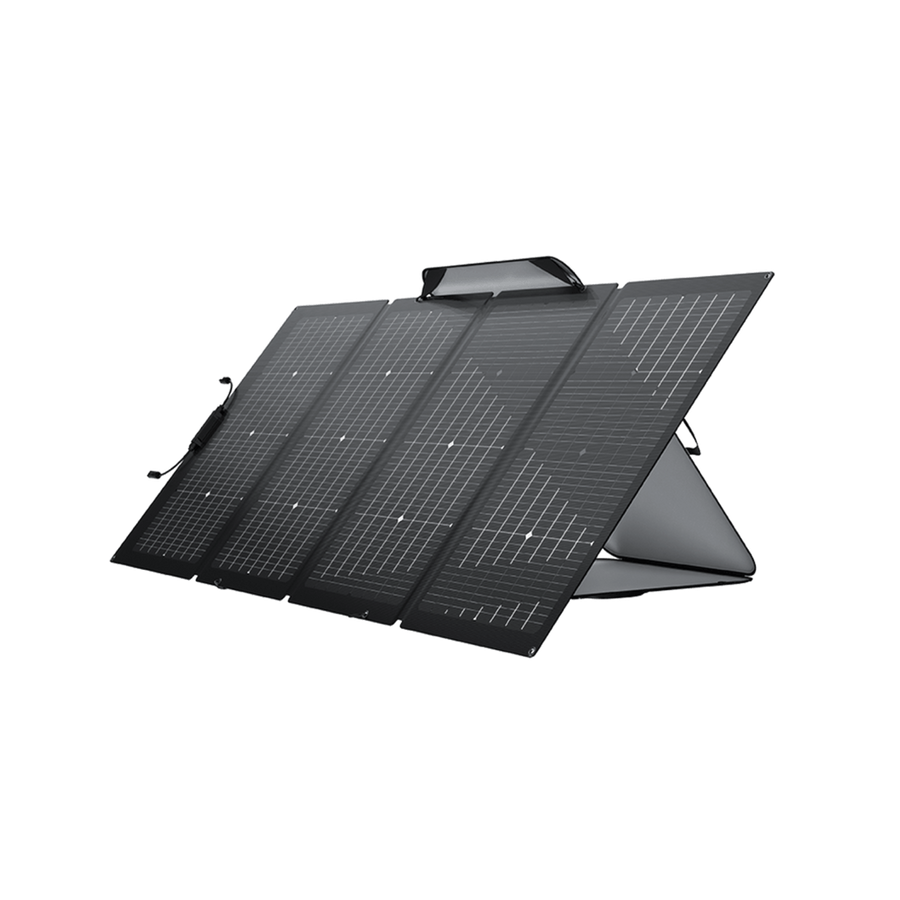
The technology leader — EcoFlow's panels squeeze the most electricity from the same sunlight, and they pair perfectly with EcoFlow power stations. Prices change often — the figures below are recent prices, so check before you buy.
- 220W Bifacial (NextGen) — the sweet spot (about $399 on sale, up to $549 at list). The panel in the photo. Bifacial means it catches sunlight on both sides — the back picks up light bouncing off the ground for up to 25% extra power. Folds up with its own kickstand case.
- 160W Portable (NextGen) — the light one (about $219). Uses newer TOPCon cells for high efficiency in a smaller fold. Good for topping up a small station like the RIVER 3 Plus.
- 400W Portable — the big one (about $499 to $599). Serious refilling power for large stations like the DELTA 3 Max. Heavier at about 35 pounds — a two-hand carry, not a one-hand carry.
- Who it is for: anyone who wants the most power per square foot, and especially anyone who already owns an EcoFlow power station — the plugs and cables just work together.
2. Jackery
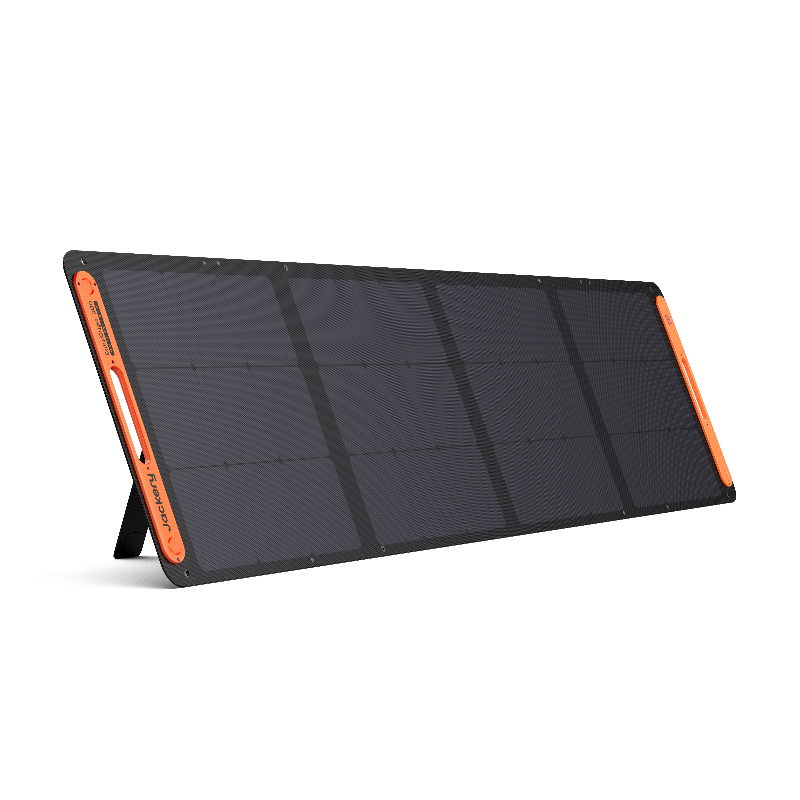
The best-known name in portable power — Jackery's SolarSaga panels are the toughest of the group, built to live outdoors. Recent prices below; they change often.
- SolarSaga 200W — the sweet spot (about $379 to $429). The panel in the photo, with the orange handles. Also bifacial, about 24% efficient, and rated IP68 waterproof — the highest weather rating here. It can sit out in a downpour. Under 15 pounds.
- SolarSaga 100 Prime — the small one (about $199). A 100W panel for small stations and short outages. Light and simple.
- SolarSaga 500X — the big one (about $799). 500 watts from one panel — pairs with Jackery's largest stations for the fastest solar refills the brand offers.
- One honest note: Jackery uses its own plug shape on some stations, so a Jackery panel is the simplest match for a Jackery power station. Other brands' panels can work but may need an adapter cable.
- Who it is for: anyone who will leave panels outside in real weather, and anyone who already owns a Jackery power station.
3. Bluetti
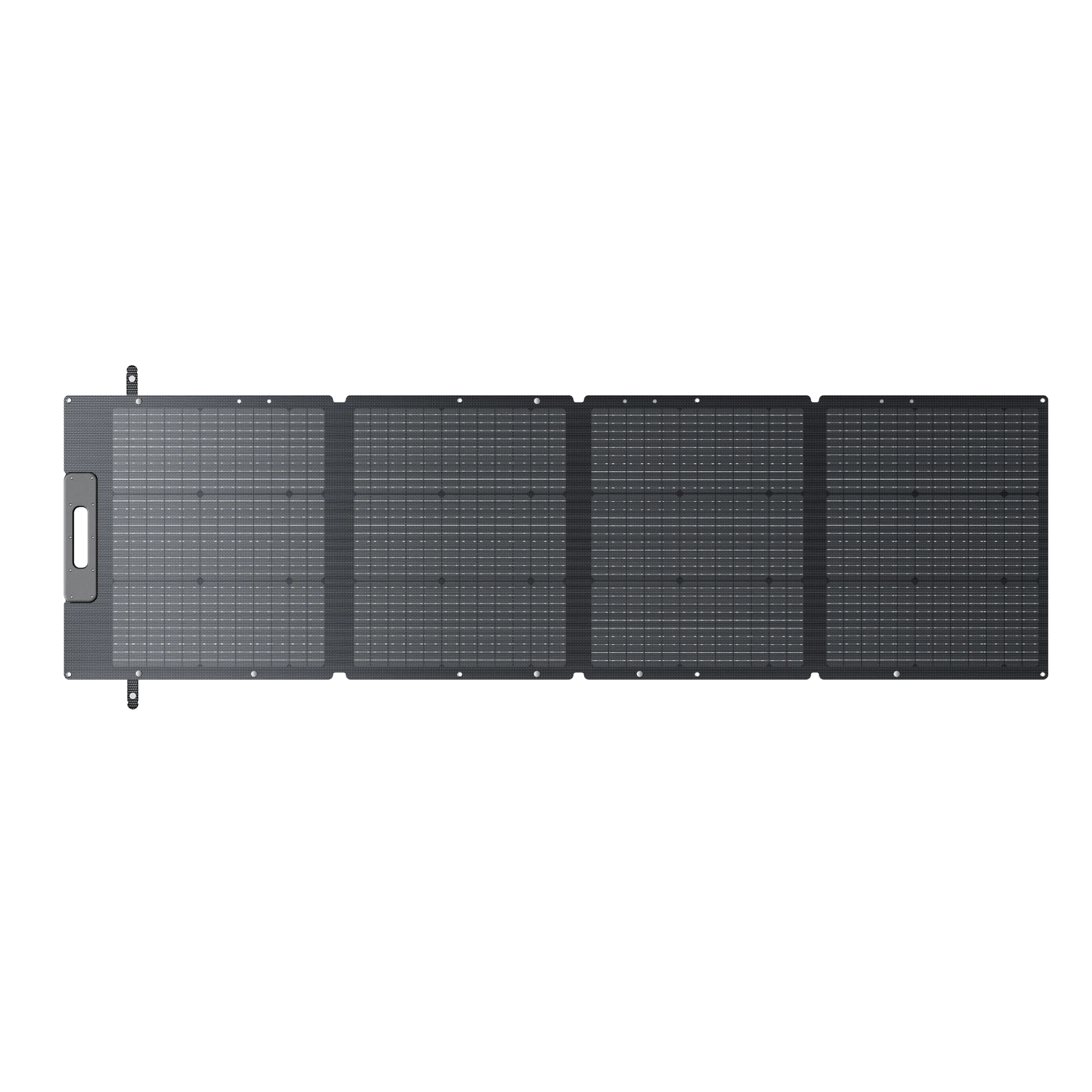
The value pick with a clever advantage — Bluetti panels use standard plugs, so they work with almost any brand's power station. Recent prices below; check before you buy.
- PV200 — the sweet spot (about $449). The panel in the photo. 200W, about 23% efficient, folds into four sections with a carry handle and built-in kickstands. Tough ETFE coating resists scratches.
- PV120 — the small one (about $279 to $299). 120W for small stations. A good first panel if you only need to keep phones and a few lights going.
- PV350 — the big one (about $849). 350W for large stations — Bluetti's own Elite 200 V2 can accept up to 1,000W of solar, so two of these refill it fast.
- Who it is for: anyone who wants the most flexibility — the standard MC4 connectors (the universal solar plug) mean a Bluetti panel can plug into EcoFlow, Jackery (with an adapter), Bluetti, and most other stations. Also the best choice if price matters most.
4. Anker Solix
The fourth name you will see everywhere — Anker’s power-station family is called Solix, and it is the set a lot of local folks bring home from Costco. If your station already says Solix on the side, its own panels are the simplest match. Prices move around a lot on these; check before you buy.
- PS200 — the sweet spot. A 200W folding panel with kickstands, the direct match for mid-size Solix stations like the C1000.
- PS100 — the small one. 100W for the little stations — enough to keep phones, lights, and a CPAP battery topped up in good sun.
- PS400 — the big one. 400W for the large Solix stations (the F2000 and F3800) that can swallow a lot of sun at once.
- Plugs, in plain words: Solix panels end in the standard MC4 solar plugs, and the box includes the adapter cable their own stations need. For a different brand’s station, match plugs the same way the Bluetti note above describes — and never force a plug that does not want to fit.
- Who it is for: anyone who already owns an Anker Solix station, or finds one on a good sale — buying the panel from the same family skips every adapter question.
How panels refill your power station — simple math
- Panel watts × sun hours ≈ watt-hours per day. A 200W panel in 5 hours of good Florida sun makes roughly 1,000Wh in a day — enough to refill a medium (1,000Wh) power station from empty.
- Florida gets about 5 peak sun hours a day on average — more in summer, a bit less in winter. Morning and late-afternoon sun count for less, so most of your power comes between about 10 AM and 3 PM.
- Match the panel to the station's solar limit. Every power station lists a maximum solar input — for example, the Jackery Explorer 1000 v2 accepts up to 400W of solar, and the Bluetti Elite 100 V2 accepts up to 1,000W. A bigger panel than the limit buys you nothing; the station simply caps it.
- You can use two panels. Two 200W panels refill twice as fast as one, as long as the total stays under the station's limit.
Sun placement basics
- Face the panel south. In Florida the sun spends the day in the southern sky — a south-facing panel catches the most hours of direct sun.
- Tilt it toward the sun. Lay it flat and you lose power morning and evening. The built-in kickstands let you angle it — steeper in winter, flatter in summer.
- No shade — not even a little. Shade hurts far more than you would guess: a shadow across one corner can cut a panel's output in half. Keep it clear of trees, fences, and the house's shadow.
- Keep the glass clean. Dust, pollen, and leaves block sunlight. A wipe with a damp cloth now and then keeps output up.
- Move it if you can. Nudging the panel to follow the sun — east in the morning, south midday, west in the afternoon — adds meaningful power over the day.
What NOT to expect
Solar panels are wonderful for outages, but be honest with yourself about the limits. A cloudy day can cut output to a small fraction of the rated watts. Panels make no power at night — that is what the stored battery is for. And no portable panel setup will run your central air conditioner or electric stove — those need thousands of watts all at once. Panels plus a power station cover the essentials: fridge, phones, lights, fans, internet, and medical devices like a CPAP.
I will build your whole system with you
The panel and the power station have to match — the right watts, the right plugs, the right size for your fridge and your outage plan. I do this for you, in person. I will help you pick the panels and the power station as one working system, set it all up, plug it together, and show you exactly how it runs your home when the power goes out.
- On-site help in Sun City Center and nearby. I come to you — no hauling heavy batteries to a store.
- One working system, not two boxes. Panels, station, cables, and placement — configured together and tested before he leaves.
- Call Sean: (813) 770-6082. Tell him what you want to keep running in an outage, and he will size the whole system for you.
Straight 2 Work Tech, LLC — patient, plain-words tech help.
(813) 770-6082